

- Home
- Products & Solutions
- PLM Product Lifecycle Management System
PLM Product Lifecycle Management System
PLM (Product Lifecycle Management) is a management platform that integrates product lifecycle data through digital means, from concept design, R&D, manufacturing to service.
Through a PLM system, companies can centrally manage product data and versions, achieve cross-departmental collaborative work, and automate quality processes, thereby significantly improving R&D efficiency, reducing error costs, and enhancing supply chain transparency and customer trust.
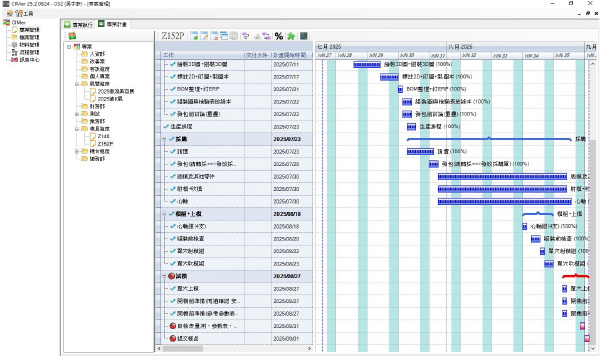
Traditional Challenges and PLM Solutions
The manufacturing industry faces many common pain points in product research and development and management, and PLM systems provide corresponding digital solutions.
| Traditional Challenges | PLM solutions |
|---|---|
| Files are scattered and versions are inconsistent. | Centralized management and version control improve accuracy and efficiency. |
| Cross-departmental communication difficulties | Task tracking and process visualization facilitate collaborative work. |
| Audit preparation is time-consuming and high-risk. | Automated document generation and compliance checks reduce audit risks. |
With the implementation of PLM, quality is no longer the responsibility of a single department.
Rather, it is the result of collaborative efforts across the entire organization.
Rather, it is the result of collaborative efforts across the entire organization.
1
Planning and Definition
Establish project framework, set quality goals and milestones

2
Product Design and Development
Managing CAD drawings, design changes, FMEA analysis, and design reviews.
3
Process Design and Development
Establish process flow diagrams, control plans, PFMEA, and tooling design.
4
Product and process validation
Integrating trial production reports, test data, MSA and SPC analysis
5
Feedback, evaluation and correction
Track problem areas, implement continuous improvement, and update document versions.
The core value of PLM digitalization
By implementing a PLM system, we can digitize quality planning and verification processes, improve product development efficiency and audit pass rates, and strengthen supply chain collaboration and customer trust. PLM is not just a tool, but a core component driving the organization's comprehensive digital transformation.

File and Version Management

Task and process tracking

Quality tool integration

Compliance audit support
AI empowers four major PLM applications
The next-generation PLM platform, incorporating artificial intelligence technology, enhances R&D project management, quality planning, and document version control. Some PLM systems include built-in FMEA analysis templates compliant with AIAG-VDA standards, providing a comprehensive upgrade in control and risk analysis, helping companies maintain a leading edge in a highly competitive market.
Consulting services