

- Home
- Products & Solutions
- CIMer AI Intelligent Design Guidance System
CIMer AI Intelligent Design Guidance System
CIMer AI Intelligent Design Guidance System can be understood as a manufacturing R&D design platform that combines PDM/PLM, CAD collaboration, process management, and AI-assisted decision-making. It is mainly used to help companies digitize and intelligently integrate the process of "product from design to mass production".
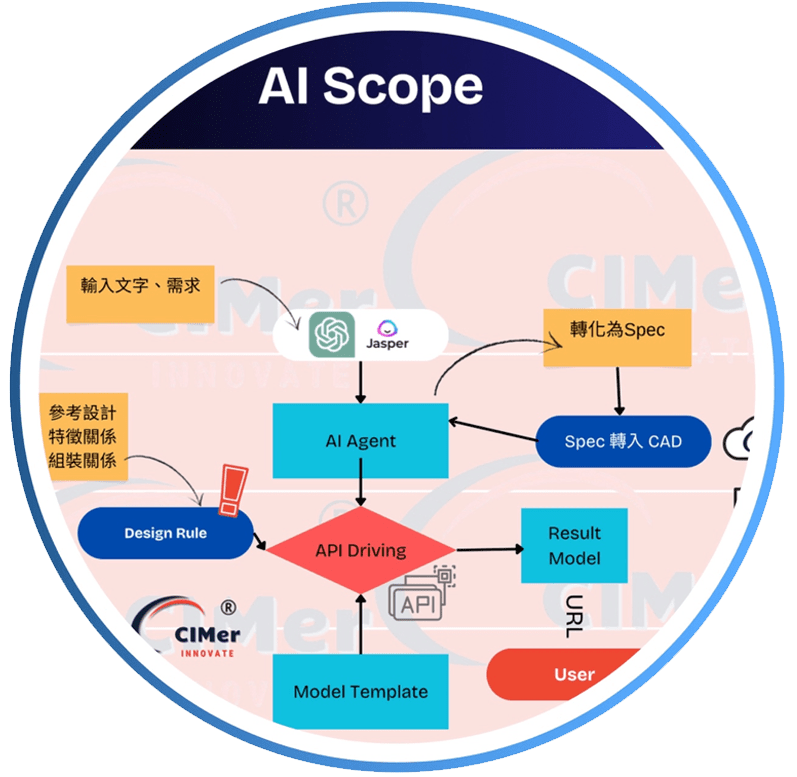
It is a system centered on distributed data management (PDM) and product lifecycle management (PLM), primarily managing:
- CAD design drawings (SolidWorks, Creo, NX, Inventor, etc.)
- Materials and Bill of Materials (BOM)
- Design Change Process (ECN/EC)
- Project progress and R&D management
- Sign-off and review process
- Web Collaborative Design and Cross-Departmental Collaboration
Its core concept is to "digitize and streamline the entire product development process," allowing companies to complete design, review, tracking, and management on a single platform.
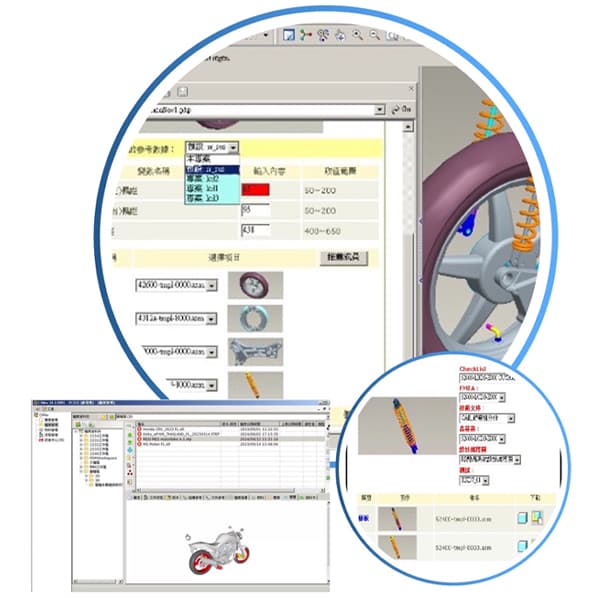
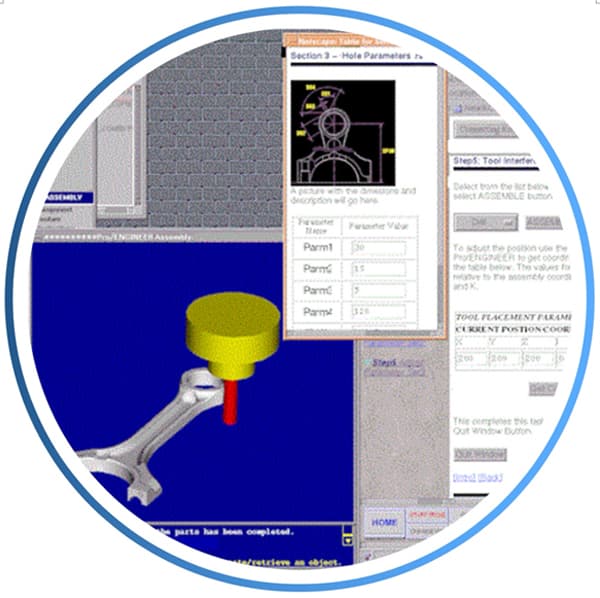
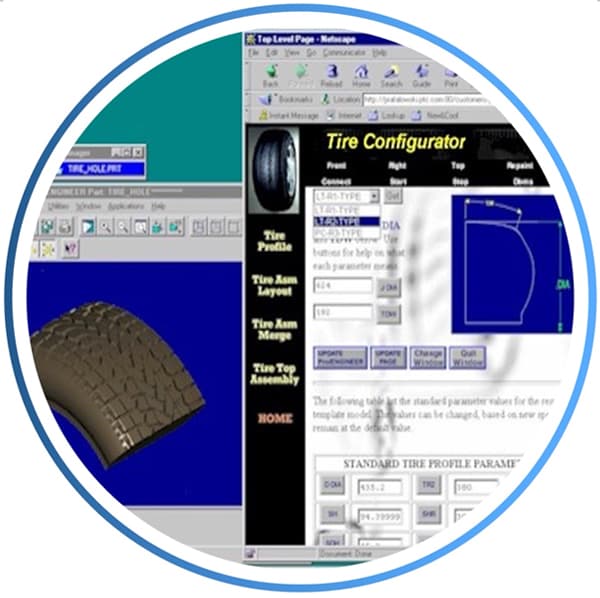
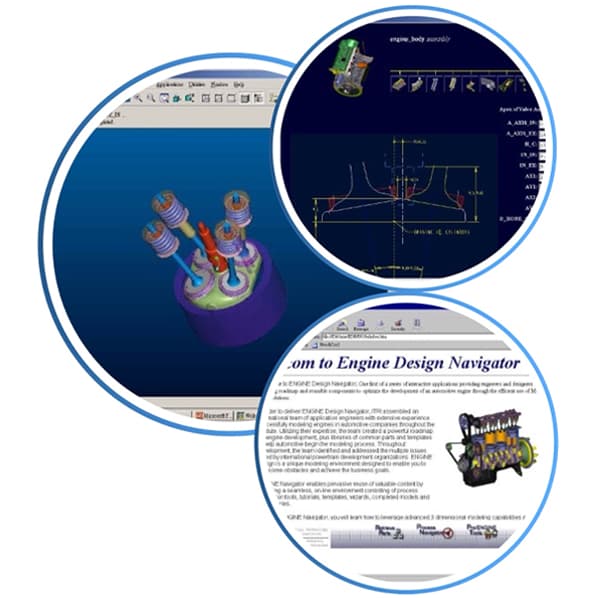
In CIMer's next-generation applications, "AI-powered intelligent design guidance" typically refers to:
1. Design Guidance: Recommends parts/materials based on historical design data, automatically prompts for design specifications or errors, similar to an "engineering design assistant".
2. BOM / Smart Material Recommendations: Automatically compares part numbers and suggests alternative materials (to reduce costs or material shortage risks).
3. Process Forecasting and Risk Analysis: Analyze potential delays in design versions and identify approval nodes prone to bottlenecks.
4. Knowledge base + AI search: Quickly search historical drawings and design cases to reduce repetitive design work for engineers.

1. Seamless integration with CAD, allowing direct operation, uploading, and version management within 3D CAD tools such as SolidWorks, Creo, NX, and Inventor.
2. Distributed architecture (replication): Data is synchronized across multiple servers, improving efficiency and security.
3. Unlimited staffing architecture (partial solution), suitable for expansion of medium and large-sized manufacturing enterprises.
4. Full-process integration, from order acceptance → design → BOM → approval → production preparation.
Mechanical manufacturing design management, electronic product R&D process, automotive parts development, engineering change management (ECN), and multi-department collaborative design.
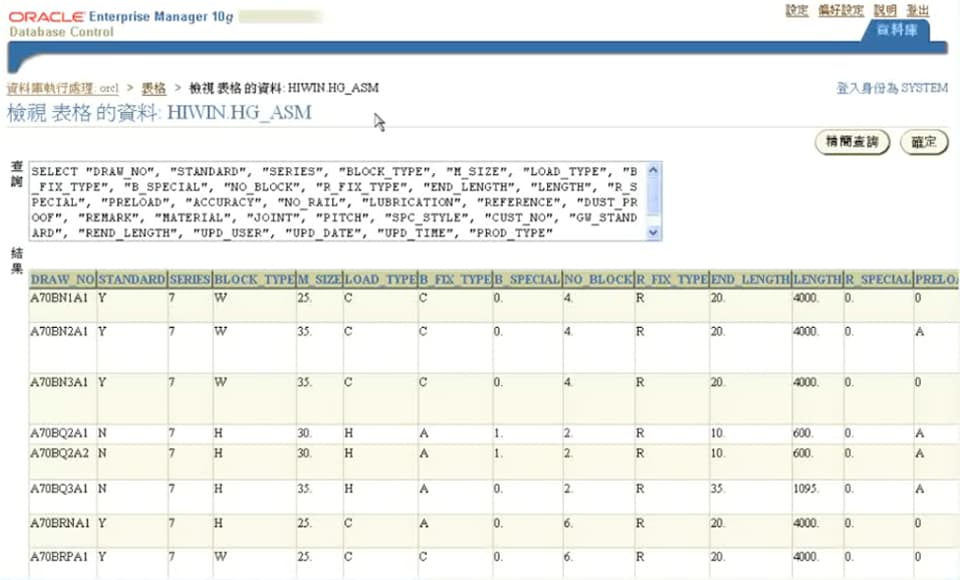
CIMer AI Intelligent Design not only develops a smart guidance and management system for AI-assisted management of R&D design data, classification and sharing of parts libraries, but also provides customized DFM tools for enterprises.
1. Develop modular design standards to improve the technical skills of designers and establish an online design training center so that the company can retain design knowledge and experience even if employees leave. Standardize the product design process to ensure quality. Provide guidance and instructions for novice mold or mechanism designers and integrate and manage molds, mechanisms, and other components with a database.
2. Support for R&D Design Data: A modular design specification for classifying and sharing commonly used R&D parts libraries is established, along with a rapid mechanism design process and a readily accessible standard template parts library. AI is used to integrate and collect the design experience of different senior engineers on their respective parts, combining different workflows to create a feasible design system that operates on 3D CAD. This design system further drives users to update versions and improve their operational capabilities.